
It’s not a recipe.
Flour.Water.Salt.
That’s the whole ingredient list.The rest of the book is about what you do with them.
“Learn this system, and you will never need a bread recipe again.”
The book
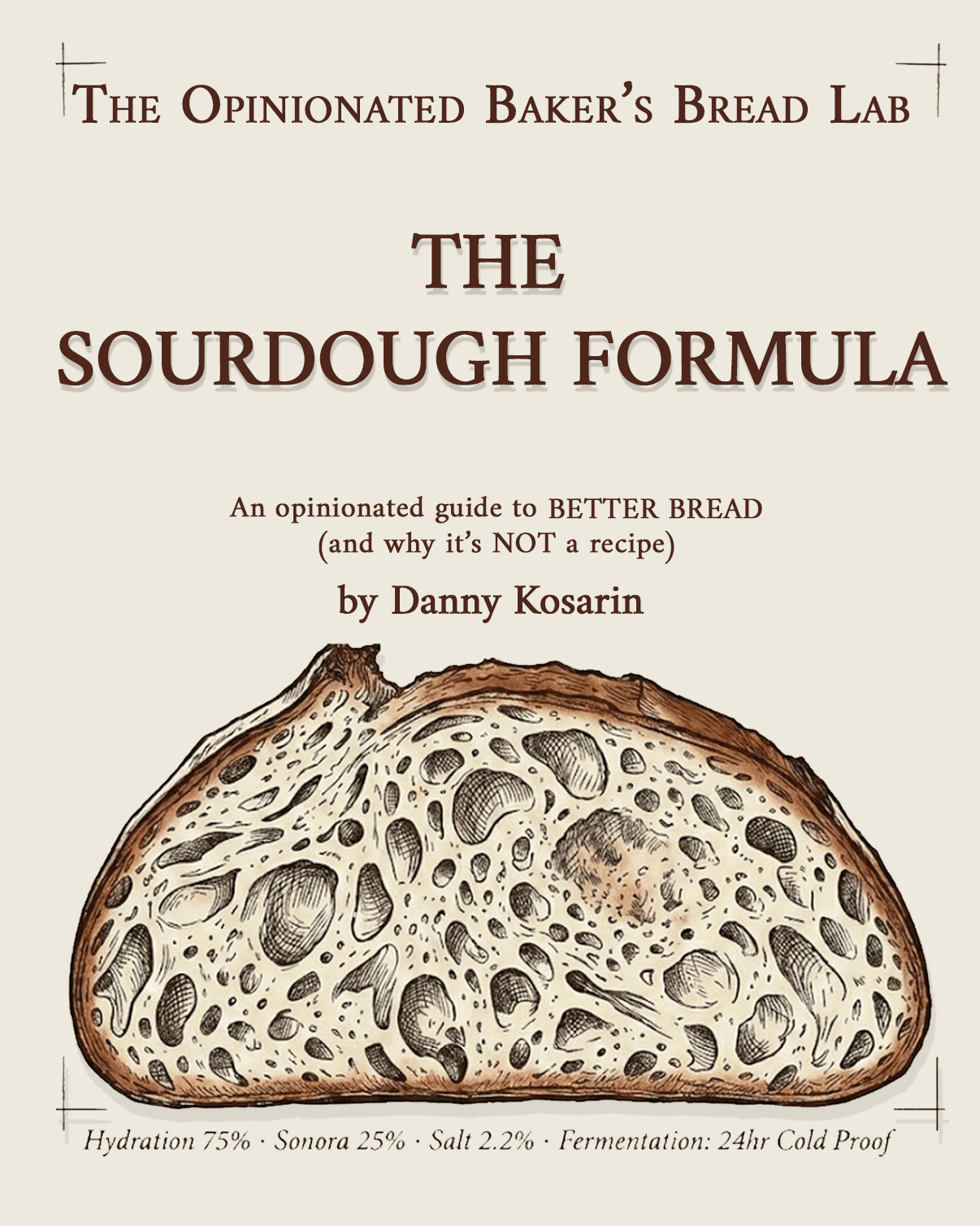
The Sourdough Formula
An opinionated guide to BETTER BREAD (and why it’s NOT a recipe)
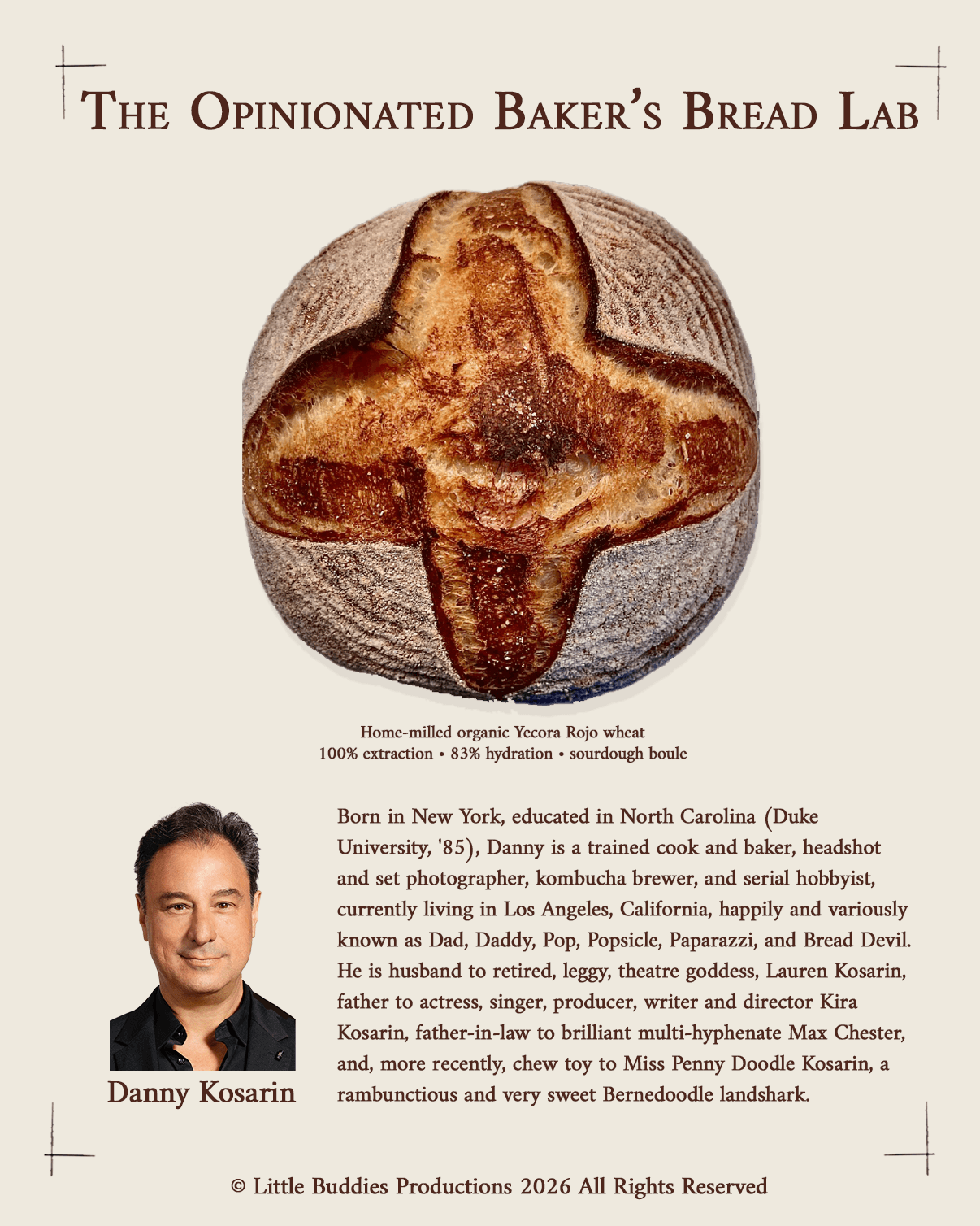
by Danny Kosarin
The Sourdough Formula is not a recipe collection. It is one system, built on baker's percentages and decades of obsessive practice, that teaches you what your dough is doing and why, so you can stop following instructions and start making your own calls. It is opinionated on purpose: it tells you exactly where to start, what to master first, and what to ignore until you have earned the complications.
From The Sourdough Formula, coming December 2026.
“The same system describes any variation you can imagine and gives you an almost secret language by which you can tell others what you baked. I could, for instance, tell you I made an 80% hydration whole grain Red Turkey boule with 15% inoculation and 2% salt, and you could make it at any scale without another word of instruction.”
Foreword — A Word on the Word “Opinionated”
“If you don't want to read about flour and mills and gluten and enzymes, and instead just want to know how to bake a decent, edible loaf, well, I'm afraid you may have come to the wrong place.
Sure, this book contains far more information than is strictly necessary to bake good bread. That is not just because I promised you an opinionated book. It is also because I am a nerd, through and through. This book is the direct result of how I think about, acquire, and process information, and how I learned to be a very good baker.”
— From The Sourdough Formula
What's inside
Twelve parts, one system
- 01The Opinionated Baker, who he is and why you should careWhy I bake the way I do, where these opinions came from, and why I ask you to trust them.
- 02Flour Is the StarHow wheat, milling, protein, and extraction determine the dough you can make and the bread it can become.
- 03It’s a Formula, Not a Recipe!How baker's math lets you understand a bread, change it deliberately, and make as much or as little of it as you want.
- 04Starter, Levain, FermentationHow to maintain a culture, build the levain a bake requires, and recognize what fermentation is actually doing.
- 05The ProcessHow mixing, strengthening, fermentation, and time turn a formula into dough ready to become bread.
- 06Shaping, Cold Proof, and Bake EnvironmentHow to preserve the dough you developed, prepare it for the oven, and create the conditions for it to rise and brown properly.
- 07Inclusions vs. EnrichmentsWhat happens when ingredients beyond flour, water, salt, and levain enter the dough, and where each belongs in the formula.
- 08Reading the Finished LoafHow crust, shape, ear, crumb, texture, and flavor reveal what happened throughout the bake.
- 09TroubleshootingHow to work backward from the loaf, identify the most likely cause, and decide what to change next time.
- 10A Few Formula SkeletonsAdaptable starting structures for lean hearth breads, country loaves, and pan breads, built to be understood rather than merely followed.
- 11Tools and SetupWhat genuinely helps, what you can do without, and how to build a kitchen that supports the way you bake.
- 12ConclusionWhat it means to give someone a loaf, and where your baking goes once the system becomes your own.
Plus appendices: a getting-started guide to the Bread Lab app, a glossary, a formula math cheat sheet, and the complete bake workflow.
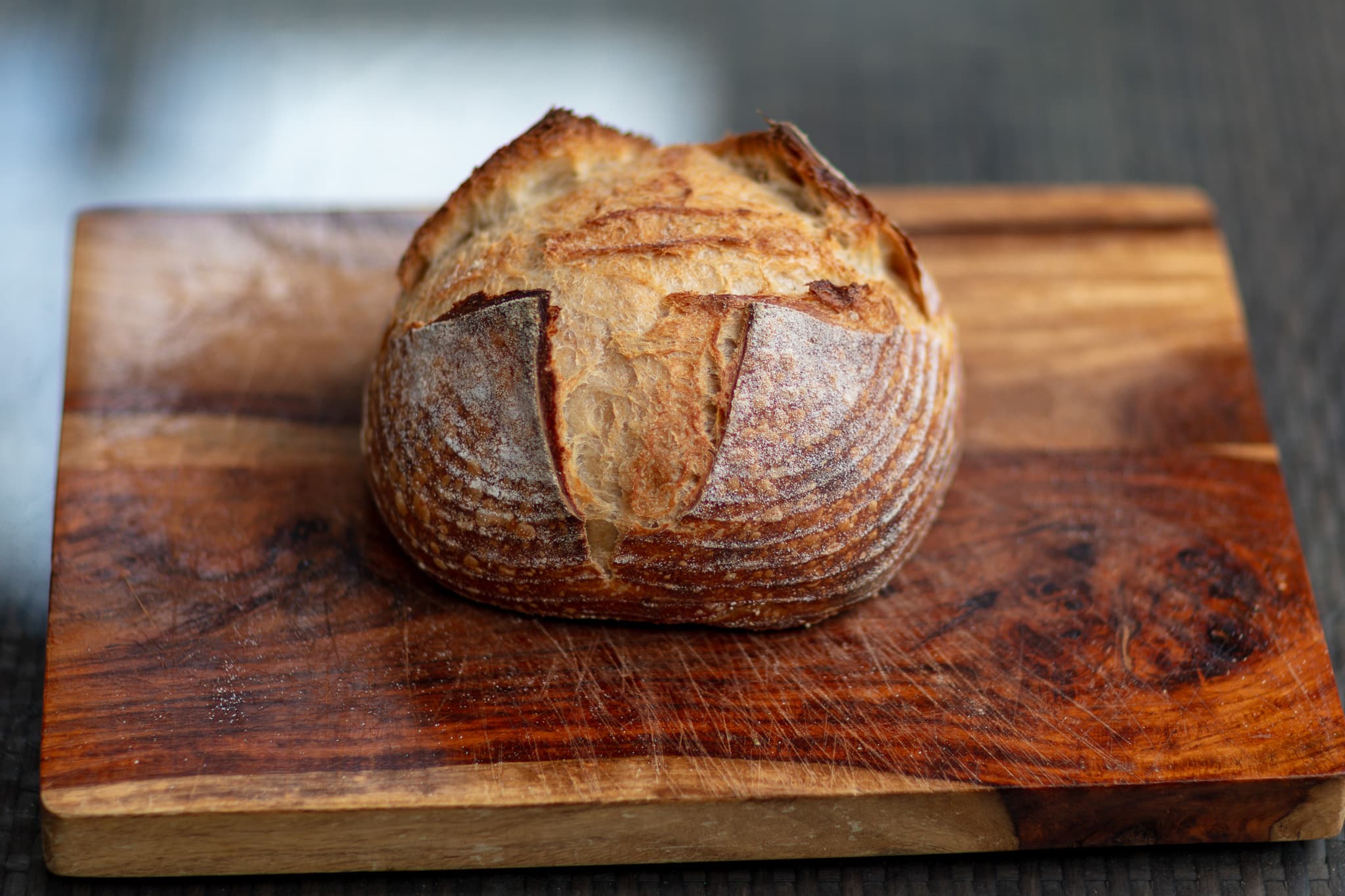
“Another one I swear by: Start with hearth breads. These are the free-formed, traditionally shaped loaves—the boules and bâtards and baguettes, baked on a stone, a steel, or in a Dutch oven, their shapes held aloft by structural strength alone, the skin tightened like a ball of mozzarella. Hearth breads are the best place to start not because they’re easiest (they’re not), but because their failures will teach you far more than your successes. Loaf pans and other forms forgive far too many sins for you to learn anything useful from them.”